The 30-yard is the second-largest container in the lineup, sitting between the 20-yard ($695) and the 40-yard ($895). It handles the jobs a 10-yard or 20-yard would overflow: a two-layer shingle tear-off on a Sedgwick…
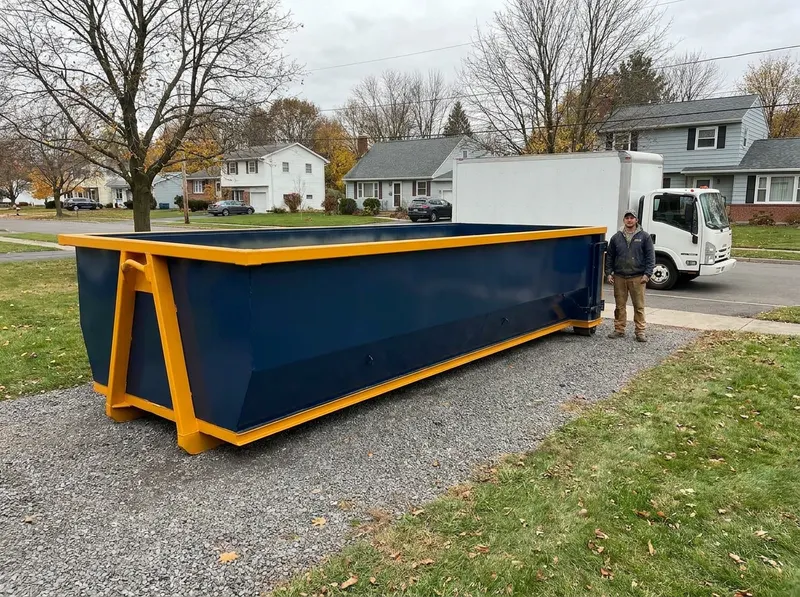
The 30-yard is the second-largest container in the lineup, sitting between the 20-yard ($695) and the 40-yard ($895). It handles the jobs a 10-yard or 20-yard would overflow: a two-layer shingle tear-off on a Sedgwick colonial, a whole-kitchen-and-bath gut in Strathmore, or decades of accumulated furniture and boxes during an estate clearout in Eastwood. A dumpster rental is not junk removal, the container is dropped, you load it on your own schedule, and the team hauls it when you call for pickup.
That is why homeowners mid-renovation and contractors on a job reach for the 30-yard: it stays on site long enough to fill at your pace.
Step 1: call (315) 227-9021 or text a photo of the debris so the size is confirmed before delivery. Step 2: a driver delivers the roll-off, usually within one business day, and places it where you point. Step 3: you load it over your rental period, keeping debris below the top rail so it hauls legally.
Step 4: call for pickup and the full container is hauled away. Because the 30-yard needs about 60 feet of straight clearance to back in and tilt the roll-off, a flat driveway or the street edge works best; plywood under the wheels protects asphalt on a Tipperary Hill or Westcott driveway with soft spots. A 30-yard parked on a public street in Syracuse may need a right-of-way permit from the City of Syracuse, streets near University Hill, Near Westside, and Lincoln Hill are the common spots where that applies, so confirm before the drop.
Decision-fit is mostly about debris volume versus space.
A 10-yard fits a single-bathroom remodel; a 20-yard fits a mid-size renovation or a garage cleanout; the 30-yard fits a roof tear-off, a multi-room gut, or a full-house cleanout where the trade-off is simple, it holds far more debris but takes up more driveway. Step up to the 40-yard only for very high-volume, lightweight debris like siding or a full-structure demo. Heavy, dense loads such as concrete, dirt, brick, or asphalt shingles sit low and heavy; roofing and concrete have construction and demolition material weight rules, so a 20-yard sometimes suits a pure-concrete job better than a half-empty 30-yard.
The flat $795 covers the weight a residential 30-yard load normally carries, which is the point of all-in pricing, no surprise overage line on the invoice.
Some materials never go in any roll-off. Keep household hazardous waste, paint, solvents, pesticides, and the like, out of the dumpster; Onondaga County runs drop-off options for those. Tires, wet paint, and refrigerant appliances are also excluded, and lead-based paint debris from older Syracuse homes follows separate disposal rules.
For the electronics piling up in a cleanout, New York's e-waste law keeps TVs and monitors out of the trash stream, and local recycling directories list where those go. Contractors loading a shared site should keep the container clear of foot paths per OSHA debris-handling guidance, and roofing crews follow fall-protection standards while tearing off. Debris that qualifies as clean fill or reusable material can often be diverted, and shingle-specific roofing industry guidance and county solid-waste rules cover how the rest is handled.
Every job gets a firm, written price after an on-site visit.
Tell us about your 30-yard dumpster job in Syracuse and we'll send a clear, written quote, usually the same day.
 Sturdy Dumpster Rental